Subject:
Submission of the report of Induction Program organized by Department of Electrical Engineering in association with EESA.
Respected Sir,
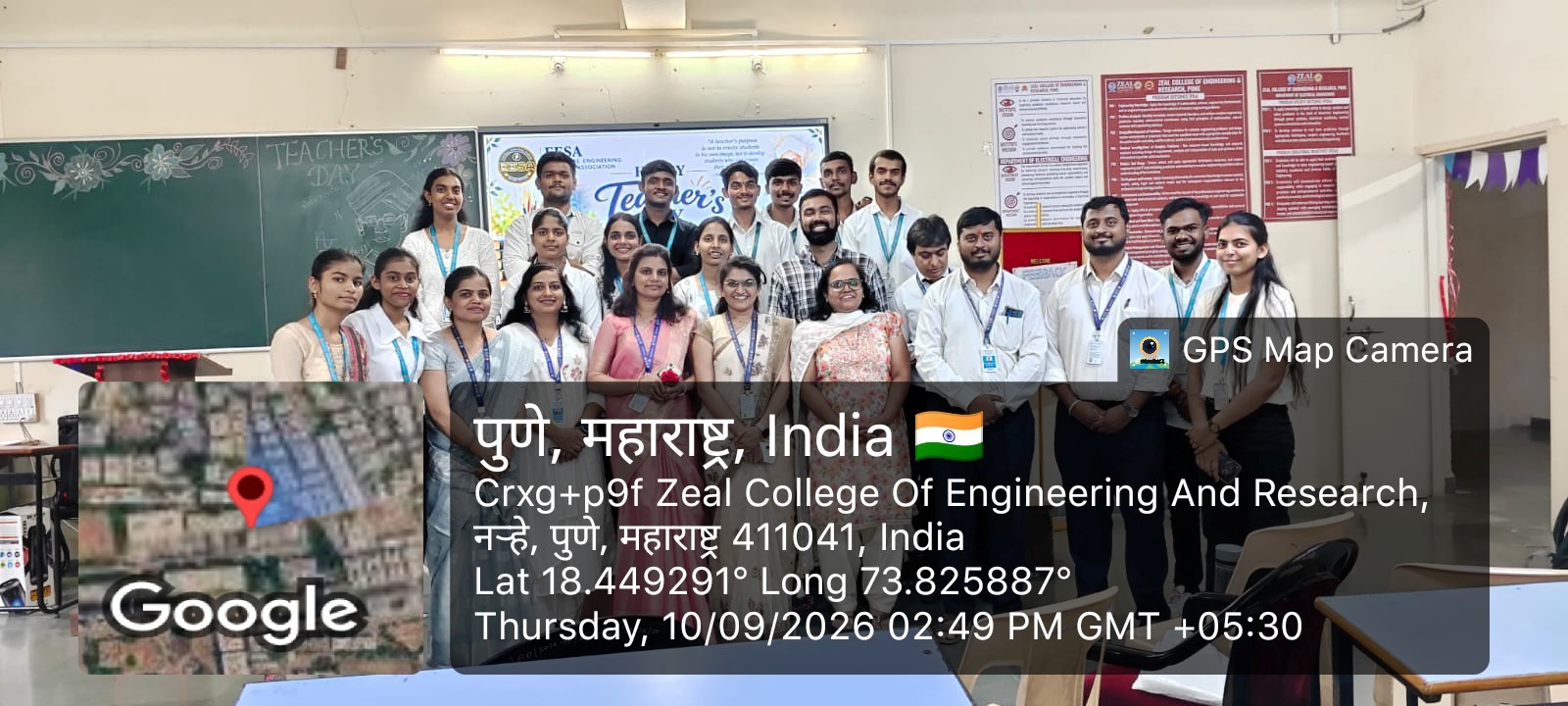
With reference to above subject, we have successfully organized “FY Induction Program 2026” from 21/09/2026 to 30/09/2026 (Time 09:30am to 05:00pm). The more detailed report and photographs are enclosed herewith.
Participants: FY Students and Faculty Members.
Faculty Coordinator: Prof. Ranjana N. Khandebharad
Student Coordinator: Rohan Jadhav & Urmi Kamat
Thanking You.
Prof. Ranjana N. Khandebharad
Faculty Coordinator
Encl: Detailed report of the event.
Date of Program | 21 October 2026 to 30 October 2026 |
Name of Event | Celebration of Induction Program organized Department of Electrical Engineering in association with EESA |
Student Coordinator | Mr. Rohan Jadhav (TY) Mr. Amit Thakur (TY) Mr. Yash Mandave (TY) Mr. Omkar Manne (TY) Mr. Atharva Ghodake (TY) Miss. Urmi Kamat (SY) Mr. Abhudya Jadhav (SY) |
Participants | SY & TY Students and Faculty Members |
Class | FY – A, B, & C |
Venue | Department of Electrical Engineering, ZCOER. |
Detailed Schedule of Program:
About the Induction Program 2026-27:
Report on First Year B.Tech Induction Programme (A.Y. 2026–27)
Organized by: Department of Electrical Engineering
Institute: Zeal College of Engineering and Research, Pune
Dates: 21st September to 23rd September 2026
Venue: C3-10, Department of Electrical Engineering, and respective laboratories
Participants: First Year B. Tech Students
- Summary of the Programme
The Department of Electrical Engineering, Zeal College of Engineering and Research, Pune, organized a First-Year B. Tech Induction Programme from 21st to 23rd September 2026 as part of the academic activities for newly admitted engineering students.
The programme was designed to familiarize students with the engineering education system, departmental facilities, academic curriculum, professional expectations, and extracurricular opportunities.
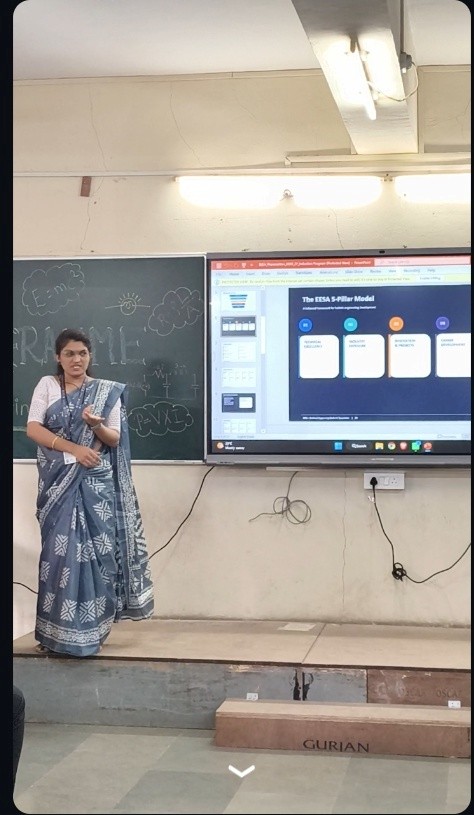
Various sessions, including Department Induction, Transition from School to Engineering Education, Understanding the Curriculum, Building an Engineering Mindset, Departmental Laboratory Visits, and Interaction with Senior Students, were scheduled to provide students with a comprehensive introduction to engineering education.
- Objectives of the Programme
- To introduce newly admitted students to the Department of Electrical Engineering and its academic environment.
- To familiarize students with the engineering curriculum, syllabus structure, and academic requirements.
- To help students understand the transition from school-level education to professional engineering education.
- To develop awareness about professional skills, technical knowledge, and engineering ethics.
- To introduce students to departmental laboratories, equipment, and practical learning facilities.
- To encourage student interaction, teamwork, and participation in departmental activities.
- To motivate students to develop an engineering mindset and career-oriented approach.
- Details of Sessions Conducted / Scheduled
Day 1: 21st September 2026 (Monday)
Session: Orientation at CSMA
Time: 2:00 PM – 5:00 PM
The orientation programme at CSMA was scheduled to introduce newly admitted students to the institute’s academic environment, institutional culture, facilities, and general expectations.
The session aimed to help students become familiar with the engineering college environment and understand the importance of discipline, academic commitment, and participation in institutional activities.
Day 2: 22nd September 2026 (Tuesday)
Session 1: Know Your Electrical Engineering Department
Time: 9:30 AM – 11:00 AM
Resource Person: Dr. Deepak Shahakar
Venue: C3-10
This session was organized to introduce students to the Department of Electrical Engineering, its academic activities, laboratories, faculty members, and opportunities available in the field of electrical engineering.
The session focused on the importance of electrical engineering in power generation, transmission, distribution, electrical machines, renewable energy systems, automation, and emerging technologies.
Students were introduced to the departmental academic environment and encouraged to develop technical knowledge and practical skills throughout their engineering education.
Session 2: Sports
Time: 11:15 AM – 12:45 PM
A sports session was included to encourage physical fitness, teamwork, discipline, and healthy interaction among newly admitted students.
Session 3: Transition from School to Engineering Education
Time: 1:30 PM – 3:00 PM
Resource Person: Ms. Bhagyashree Sherkhane
Venue: C3-10
The session focused on helping students understand the differences between school education and engineering education.
Important aspects such as self-learning, time management, technical problem-solving, practical applications, project-based learning, communication skills, and professional development were highlighted.
Students were encouraged to adopt independent learning habits, actively participate in laboratory sessions, and develop analytical and critical thinking skills.
Session 4: Departmental Laboratory Visit
Time: 3:15 PM – 4:45 PM
Coordinators: Respective Laboratory In-charges & Student Coordinator
A departmental laboratory visit was scheduled to familiarize students with the practical facilities available in the Electrical Engineering Department.
Students were introduced to various laboratory equipment, electrical measuring instruments, electrical machines, experimental setups, and laboratory safety precautions.
The visit aimed to develop students’ interest in practical learning and help them understand the relationship between theoretical concepts and their real-world applications.
Day 3: 23rd September 2026 (Wednesday)
Session 1: UHV at CSMA
Time: 9:30 AM – 11:00 AM
A session on Universal Human Values (UHV) was scheduled to create awareness about human values, ethical behaviour, mutual respect, responsibility, and personal development.
The session aimed to encourage students to develop a balanced approach toward academic achievement, personal well-being, and social responsibility.
Session 2: Understanding the Curriculum: Syllabus & Programme Structure
Time: 11:15 AM – 12:45 PM
Resource Person: Mr. Chinmay Deshpande
Venue: C3-10
This session focused on familiarizing students with the academic curriculum and programme structure of the B. Tech Electrical Engineering course.
Students were introduced to the semester-wise academic structure, theory and practical courses, course outcomes, evaluation methods, examinations, credits, and academic progression.
The session aimed to help students understand the importance of systematic academic planning and continuous learning.
Session 3: From Student to Professional: Building an Engineering Mindset
Time: 1:30 PM – 3:00 PM
Resource Person: Mr. Amit Upadhyay
Venue: C3-10
The session focused on developing a professional attitude and engineering mindset among newly admitted students.
Important aspects such as technical competency, problem-solving ability, innovation, teamwork, leadership, communication skills, professional ethics, and lifelong learning were emphasized.
Students were motivated to participate in technical events, internships, industrial visits, workshops, and skill-development activities to enhance their employability and professional growth.
Session 4: Department Activities – EESA Presentation and Games
Time: 3:15 PM – 4:45 PM
Venue: C3-10
An interactive session with senior students was scheduled to introduce newly admitted students to various departmental activities, technical events, student associations, and extracurricular opportunities.
The session aimed to encourage interaction between junior and senior students and provide guidance regarding academic preparation, laboratory work, project activities, and participation in departmental events.
Students were encouraged to actively participate in departmental activities for their overall personality and professional development.
Day 4: 24th September 2026
Session 1: ZCC at H Building, 4th Floor
Time: 9:30 AM – 11:00 AM
As part of the First Year Induction Programme, students attended the scheduled session at ZCC, located on the fourth floor of H Building. The session provided an opportunity for newly admitted students to become familiar with the institutional environment and the activities organized during the induction programme.
The session was intended to help students adjust to the college atmosphere, develop a sense of belonging and understand the importance of active participation in institutional activities. It also supported interaction among students and encouraged them to approach their engineering education with confidence, discipline and enthusiasm.
Session 2: Meditation at CSMA
Time: 11:15 AM – 12:45 PM
A meditation session was arranged at CSMA to promote mental well-being, concentration and emotional stability among first-year engineering students. The session highlighted the importance of mental relaxation, positive thinking and maintaining a balanced lifestyle during academic studies.
Students were introduced to the value of meditation and mindfulness in improving attention, reducing stress and enhancing self-awareness. The session emphasized how regular meditation practices can help students manage academic pressure, improve decision-making abilities and maintain a positive attitude towards learning.
The session also encouraged students to develop healthy habits, self-discipline and emotional resilience, which are essential for personal growth and academic success.
Session 3: Time Management
Time: 1:30 PM – 3:00 PM | Venue: C3-10 | Coordinator: Dr. Vaijayanti Deshpande
The session focused on essential aspects of time management, including goal setting, prioritization of tasks, preparation of daily and weekly schedules, effective study planning, self-discipline and avoiding procrastination. Students were guided on how to manage their time efficiently while balancing academic responsibilities, practical sessions, assignments, examinations and extracurricular activities.
Special emphasis was placed on the importance of punctuality, regular attendance, maintaining consistency in studies and developing productive daily habits. The session also highlighted various techniques for improving concentration, reducing distractions, managing examination stress and completing assigned tasks within the stipulated time. Practical examples from students’ daily routines were discussed to help them understand the effective utilization of available time.
The session encouraged students to develop a positive attitude towards academic responsibilities, set realistic short-term and long-term goals and take ownership of their personal and professional development. Students were motivated to adopt effective time management strategies from the beginning of their engineering journey.
Session 4: Digital Toolbox for Electrical Engineers
Time: 3:15 PM – 4:45 PM | Venue: C3-10 | Coordinator: Mr. Jay Gurav
A departmental induction session on “Digital Toolbox for Electrical Engineers” was organized to introduce students to the importance of digital technologies and software tools in modern electrical engineering applications.
The session focused on the role of computer-based tools in circuit analysis, electrical system design, simulation, technical documentation and engineering problem-solving. Students were introduced to examples of engineering software such as MATLAB, Simulink, AutoCAD Electrical and circuit simulation platforms, highlighting how such tools can support theoretical understanding and practical learning.
The importance of digital learning resources, technical presentations, spreadsheets, online courses and professional documentation was also highlighted. Students were encouraged to improve their computer proficiency and explore digital platforms that support technical learning, project development and future industry requirements.
The session aimed to create awareness about the growing importance of digital skills in electrical engineering and motivate students to develop technological competencies from the beginning of their academic journey.
Day 5: 26th September 2026
Session 5: Campus Tour
Time: 9:30 AM – 11:00 AM
A campus tour was organized as part of the induction programme to familiarize newly admitted students with the infrastructure and facilities available at the institute. The activity aimed to help students understand the campus layout and identify important academic and administrative locations.
The tour provided an opportunity to become acquainted with classrooms, departmental laboratories, library facilities, academic buildings and other student-support facilities. The importance of laboratory discipline, proper utilization of institutional resources and maintaining a clean and safe campus environment was emphasized.
The activity helped students become more comfortable with their surroundings and encouraged them to make effective use of the available infrastructure for academic and personal development.
Session 6: Effective Study Techniques for Engineering
Time: 11:15 AM – 12:45 PM | Venue: C3-10 | Coordinator: Mr. Chanitanya Deshpande
The Department of Electrical Engineering organized a session on “Effective Study Techniques for Engineering” to guide first-year students in adapting to the academic requirements of professional engineering education.
The session highlighted the difference between school-level learning and engineering education, emphasizing the importance of conceptual understanding, analytical thinking and independent learning. Students were guided on effective time management, preparation of study schedules, regular revision, technical note-making and systematic examination preparation.
The session also focused on understanding fundamental engineering concepts rather than relying only on memorization. The importance of solving numerical problems, participating actively in classroom discussions, completing assignments regularly and utilizing library and digital learning resources was highlighted.
Students were encouraged to develop consistent study habits, maintain academic discipline and seek clarification of doubts through interaction with faculty members. The session aimed to improve students’ confidence, academic performance and problem-solving abilities throughout their engineering studies.
Session 7: Scholarship Awareness at CSMA
Time: 1:30 PM – 3:00 PM
A scholarship awareness session was arranged at CSMA to provide first-year students with information regarding financial assistance opportunities available during their engineering education.
The session focused on creating awareness about various government and institutional scholarship schemes, eligibility requirements, application procedures and necessary documentation. Students were guided on the importance of checking official scholarship notifications and submitting accurate information within prescribed deadlines.
The session also highlighted the importance of maintaining academic records, required certificates and other relevant documents for scholarship applications. Students were encouraged to seek guidance from the concerned institutional scholarship section whenever necessary.
The session aimed to ensure that eligible students were aware of available financial support and could pursue their engineering education without avoidable financial difficulties.
Session 8: Examination and Placement at CSMA
Time: 3:15 PM – 4:45 PM
An orientation session on examination and placement was arranged to familiarize students with academic evaluation procedures and future career preparation.
The examination-related portion focused on the importance of internal assessments, semester-end examinations, practical examinations, assignments, attendance requirements and academic integrity. Students were encouraged to maintain consistent academic performance and follow examination-related instructions issued by the institute.
The placement-related portion introduced students to the importance of technical knowledge, communication skills, aptitude, logical reasoning, teamwork and professional behaviour. The role of internships, technical certifications, projects and industry interaction in improving employability was also emphasized.
The session aimed to motivate students to develop both academic competence and professional skills from the first year itself, enabling them to prepare systematically for internships, higher education and employment opportunities.
Day 6: 28th September 2026
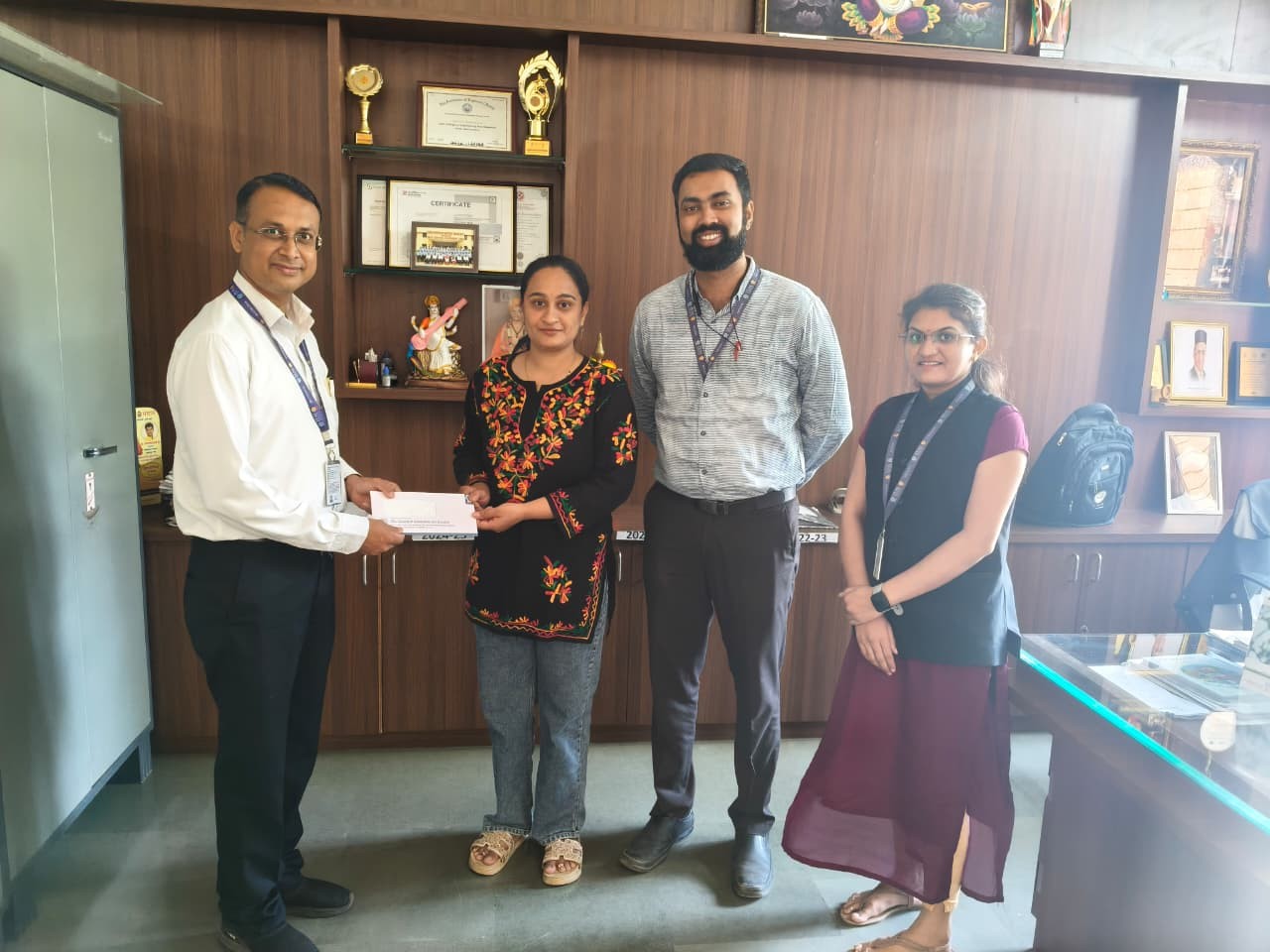
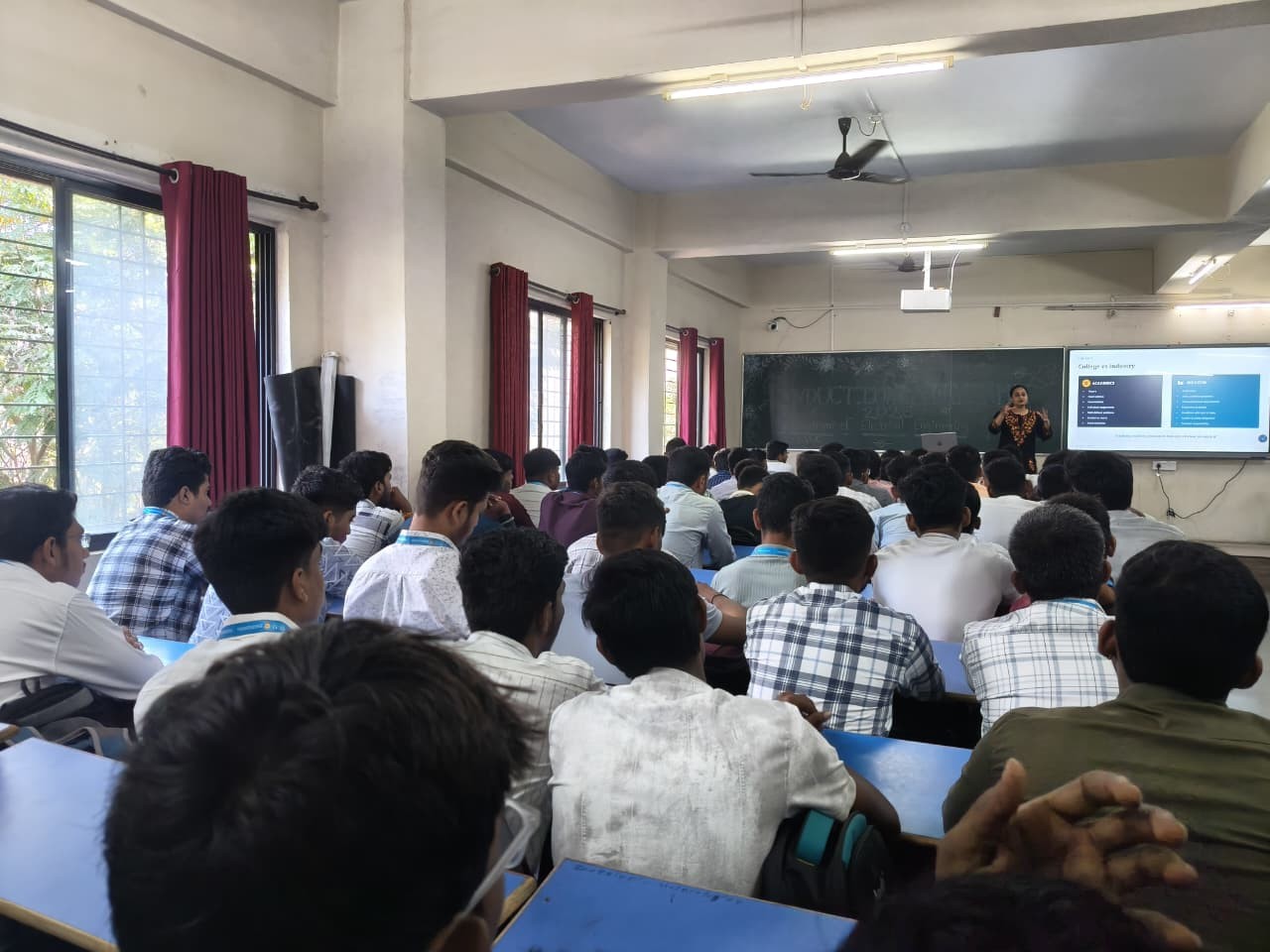
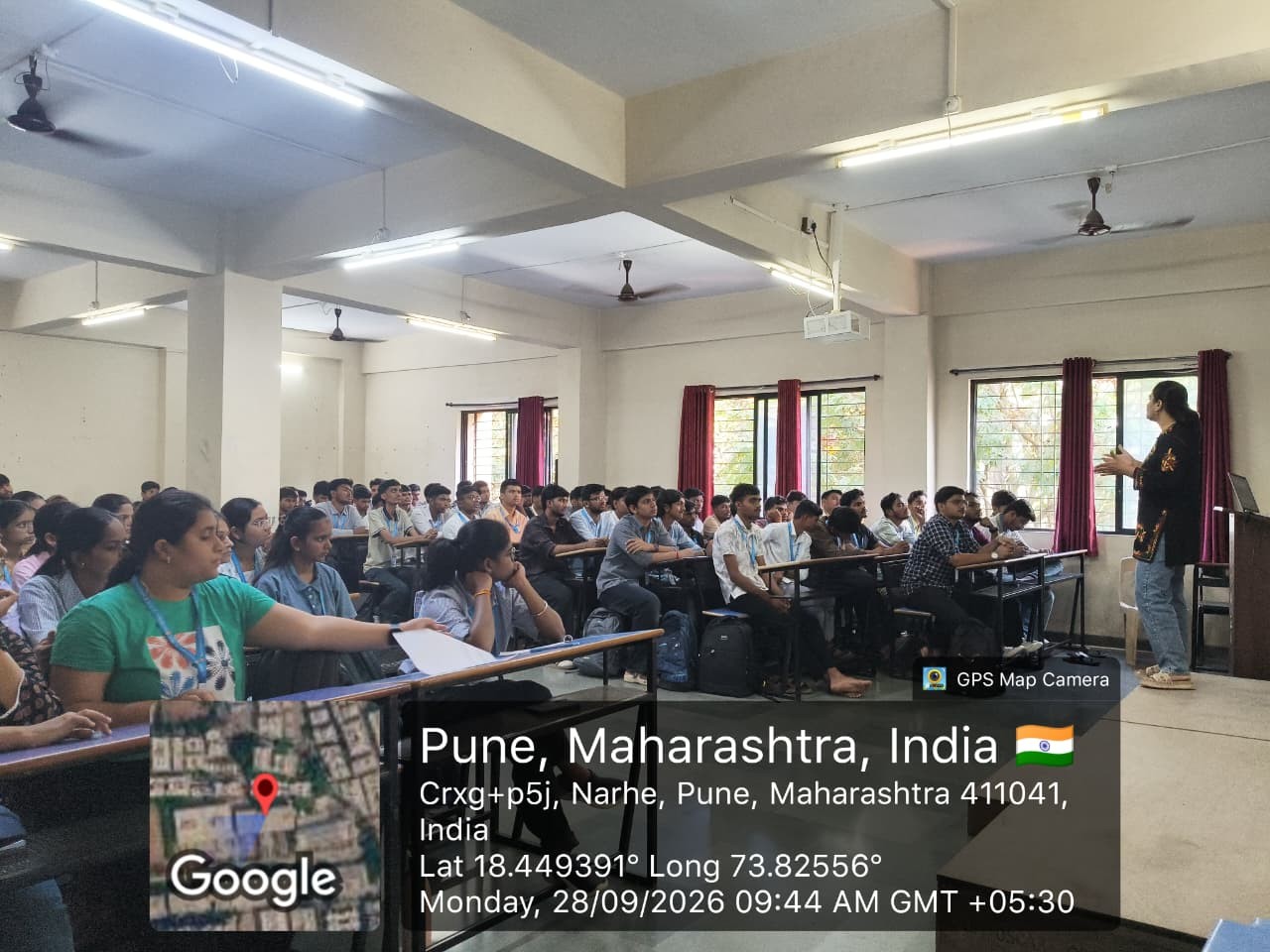
Session 9: Campus to Industry
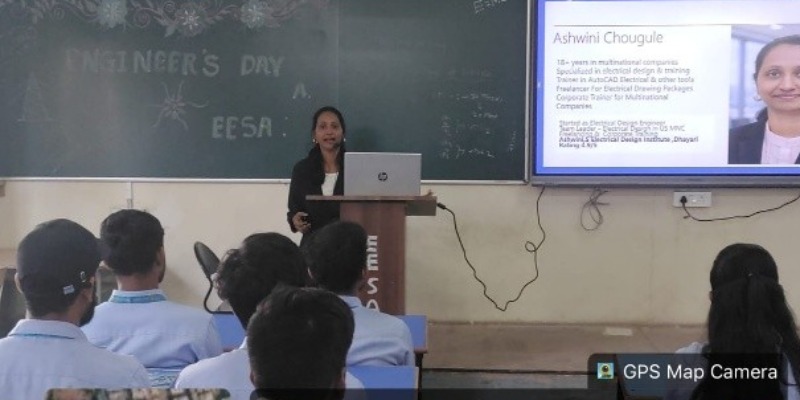
Time: 9:30 AM – 11:00 AM | Speaker: Roshani Ubale
A session on “Campus to Industry” was scheduled to guide students in understanding the transition from academic learning to the professional working environment. The session aimed to create awareness about industry expectations, employability skills and the practical application of engineering knowledge.
The session highlighted the importance of technical competency, communication skills, teamwork, problem-solving ability, adaptability and professional ethics in industrial organizations. Students were introduced to the significance of practical exposure through industrial visits, internships, technical projects and interactions with industry professionals.
The need for continuous learning, professional discipline and developing a positive work attitude was emphasized. The session encouraged students to identify their career interests early and focus on building the technical and interpersonal skills required to succeed in a competitive professional environment.
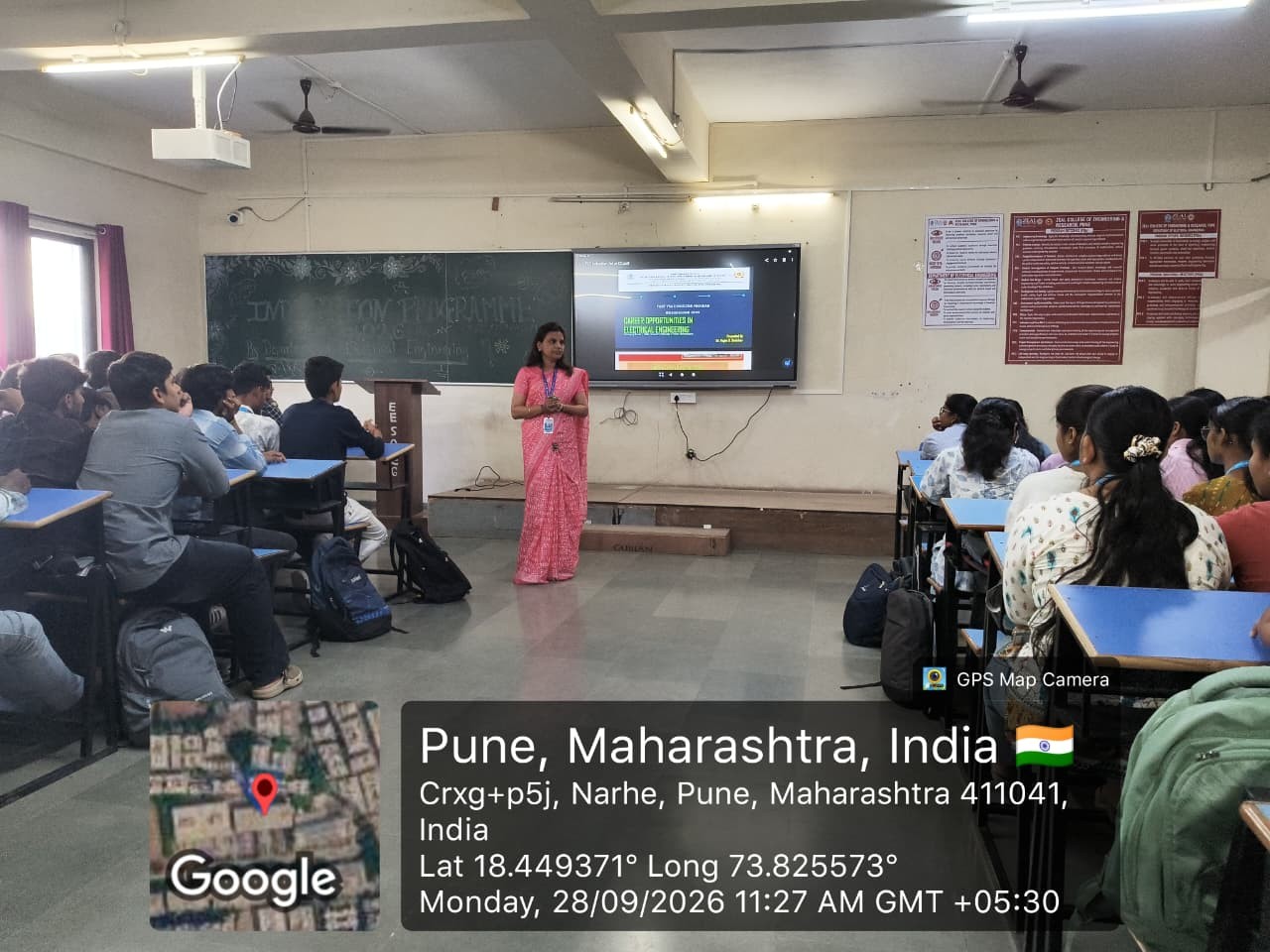
Session 10: Emerging Careers in Electrical Engineering
Time: 11:15 AM – 12:45 PM | Venue: C3-10 | Coordinator: YDS
The Department of Electrical Engineering organized a career-oriented induction session on “Emerging Careers in Electrical Engineering” to introduce first-year students to the expanding scope of the electrical engineering profession.
The session focused on conventional as well as emerging career opportunities in power generation, transmission and distribution, renewable energy systems, electric vehicles, industrial automation, electrical design, smart grids, energy management and power electronics.
Students were introduced to the increasing importance of solar energy, wind energy, battery energy storage systems, electric vehicle charging infrastructure and intelligent power networks. The role of electrical engineers in developing sustainable, efficient and reliable energy systems was also highlighted.
The session emphasized the importance of developing strong fundamentals in electrical circuits, electrical machines, power systems and control engineering. Students were encouraged to participate in technical activities, industrial training, internships, professional certification programmes and project-based learning.
The session aimed to motivate students to explore diverse career opportunities in core electrical industries, research and development, government organizations, entrepreneurship and higher education.
Session 11: POSH Awareness for Girls
Time: 1:30 PM – 3:00 PM
A special awareness session on the Prevention of Sexual Harassment (POSH) was arranged for girl students to promote awareness regarding safety, dignity, equality and respectful behaviour within the educational environment.
The session focused on the importance of maintaining a safe and inclusive campus atmosphere and understanding acceptable professional and interpersonal conduct. Students were made aware of the significance of personal boundaries, mutual respect and appropriate communication.
The session also aimed to create awareness regarding institutional support systems, grievance-redressal procedures and the importance of reporting inappropriate behaviour through appropriate channels. The role of responsible behaviour in maintaining a positive educational environment was emphasized.
The session encouraged students to develop confidence, awareness and a sense of responsibility towards creating a respectful and supportive campus culture.
Session 12: Orientation of Liberal Learning at CSMA
Time: 3:15 PM – 4:45 PM
An orientation session on Liberal Learning was arranged to introduce students to the importance of interdisciplinary education and holistic personality development.
The session highlighted the value of learning beyond core engineering subjects and encouraged students to explore areas such as communication, management, creativity, humanities, social awareness and professional ethics.
The importance of critical thinking, decision-making, teamwork, leadership and effective communication was emphasized as part of overall professional development. Students were encouraged to participate in various academic, cultural, technical and extracurricular activities to enhance their confidence and broaden their perspectives.
The session aimed to develop well-rounded engineering graduates with technical competence, social responsibility, adaptability and lifelong learning abilities.
- Student Interaction and Participation
The induction programme provided opportunities for newly admitted students to interact with faculty members, laboratory in-charges, and senior students.
The sessions were designed to encourage students to ask questions regarding the curriculum, departmental facilities, academic expectations, laboratory practices, and career opportunities.
The laboratory visit and senior-student interaction were particularly intended to help students become familiar with the departmental environment and develop confidence in their engineering journey.
- Expected Outcomes of the Programme
After participating in the induction programme, students were expected to:
- Understand the academic environment and facilities of the Electrical Engineering Department.
- Gain awareness of the B. Tech curriculum, programme structure, and academic evaluation system.
- Recognize the importance of technical knowledge, practical skills, and laboratory safety.
- Develop a positive attitude toward engineering education and professional responsibilities.
- Understand the importance of teamwork, communication, leadership, and ethical values.
- Become familiar with departmental activities, student associations, and opportunities for skill development.
- Develop confidence and motivation to pursue their engineering education effectively.
- Conclusion
The First-Year B. Tech Induction Programme was designed to provide newly admitted students with a comprehensive introduction to engineering education and the Department of Electrical Engineering.
The programme covered essential aspects of academic orientation, curriculum awareness, professional development, laboratory facilities, human values, and student engagement.
Through these activities, students were encouraged to develop technical curiosity, self-learning habits, professional ethics, and a positive approach toward their academic journey.
The induction programme served as an important initiative for supporting the smooth transition of newly admitted students into the engineering education environment.
Note: The report follows the supplied schedule. Before official submission, please verify actual attendance, session completion, and resource persons’ full names. The outcome section is written as expected outcomes because the schedule alone does not confirm what took place.
For the final departmental report, you can also include session-wise photographs, attendance sheets, student feedback, and faculty coordinator details as supporting documentation