Name of Expert: Mrs. Prachi V. Pol.
Topic of session: Faculty development program organized on the subject, Microcontrollers: Architecture and Interfacing (SY B Tech Sem II)
Beneficiaries: All faculty of the Electrical Engineering Department
No. of participants: 09
Venue: Conference room, Department of Electrical Engineering, ZCOER, Narhe, Pune.
A. Overview:
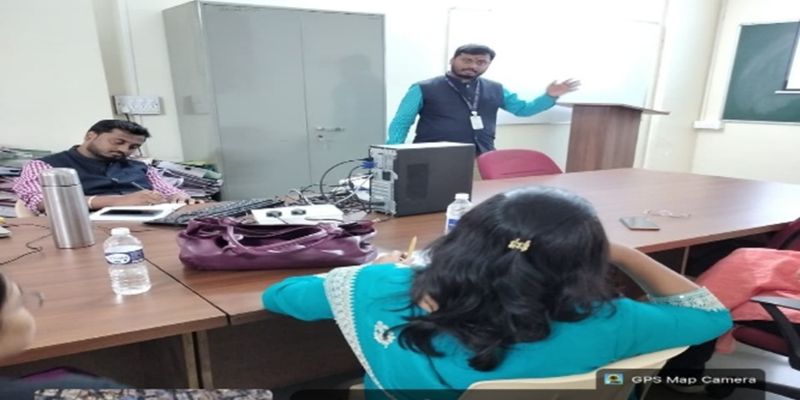
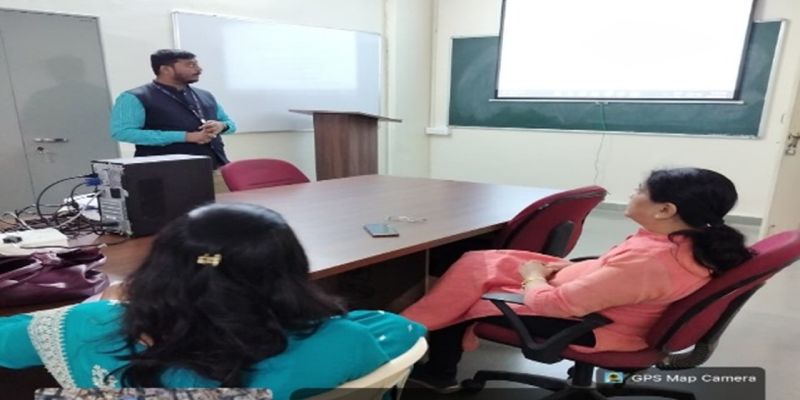
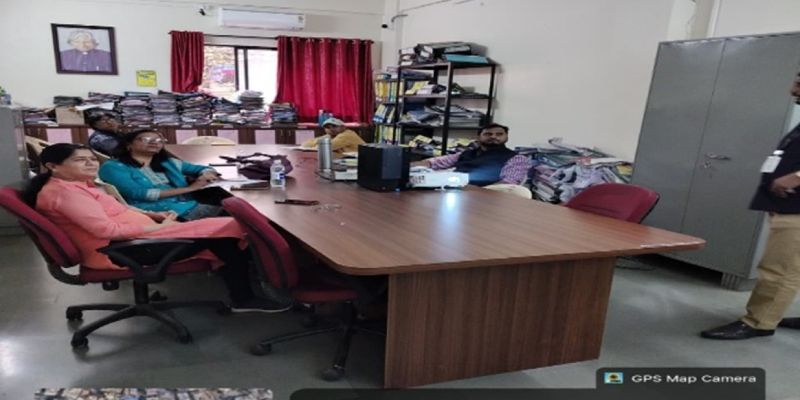
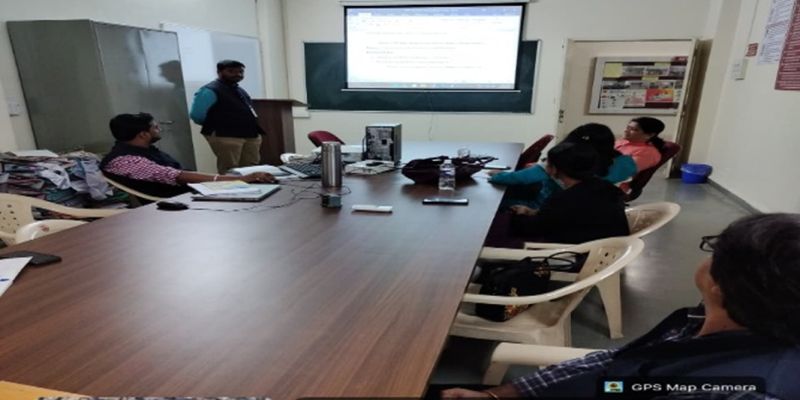
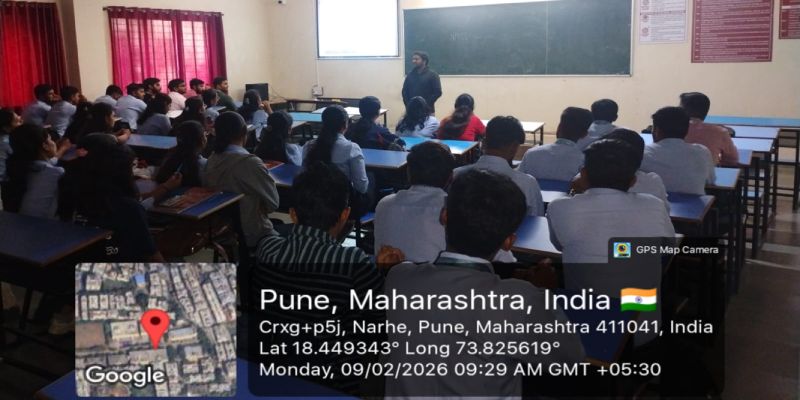
The Department of Electrical Engineering of ZES, ZCOER, Pune has organized Faculty development program organized on the subject, Microcontrollers: Architecture and Interfacing (SY B Tech Sem II) on 24/01/2026 for the faculty of the Electrical Engineering Department. This session was conducted on 24th Jan 2026 from 02.00 pm to 4.30 pm in Conference room, C-211. The session is conducted to discuss the syllabus elaboration & content delivery thus providing detailed information and guidance to department faculty on the subject ‘Microcontrollers: Architecture and Interfacing’ to be taught to SY B Tech Sem II.
The subject expert, Prachi Vivek Pol is an accomplished academician and researcher currently serving as an Adjunct Faculty member and also pursuing her PhD in the Department of Electrical Engineering at the prestigious COEP Technological University (formerly College of Engineering, Pune).
Her academic journey is marked by a deep specialization in electronics and communication. She earned her Bachelor of Engineering (B.E.) in Electronics and Telecommunication from Solapur University in 2008, followed by a Master of Engineering (M.E.) in VLSI and Embedded Systems from Savitribai Phule Pune University in 2015. Demonstrating a commitment to lifelong learning and advanced research, she is currently pursuing her Ph.D. in Wireless Communication at COEP Technological University.
The key points discussed in the session were as follows.
Syllabus Review and Strengthening:
The expert conducted a comprehensive review of the existing syllabus and provided focused academic recommendations to enhance conceptual clarity and learning effectiveness. Based on the deliberations, the following decisions were finalized:
- Introductory sessions on comparison of basic Microprocessor & Microcontroller should be conducted at the beginning of the course to establish a strong conceptual foundation.
- The syllabus content delivery should be restructured and resized to ensure logical sequencing and improved pedagogical flow in the perspective of students’ understanding.
- CISC and RISC architectures should be explicitly incorporated to strengthen architectural understanding.
- Course Outcomes (COs) should be realigned in accordance with the syllabus to ensure effective outcome-based delivery.
Unit-wise Finalized Syllabus Structure:
Unit 01: Microcontroller Fundamentals:
- Microcontroller concepts should be strengthened.
- The flow of topics can be realigned to
Unit 02: Instruction Set Architecture:
- This unit shall comprehensively cover the Instruction Set of the Microcontroller.
- A detailed discussion should be done:
- Addressing modes
- Instruction set
- Special Function Registers (SFRs)
- Timers, counters, and Watchdog Timer
Unit 03: Microcontroller Programming:
- 8051 programming using Assembly language should be discussed Essential programs such as delay generation shall be covered, progressing from Assembly language to C programming.
Unit 04: Timer and Counter Applications:
- Timer-related concepts should be discussed in this unit to improve conceptual clarity through different real-life applications understanding.
Unit 05: Serial Communication:
- This unit should be taught in a concise manner from application point of view and focused as it is useful in BE Projects.
- Serial communication topics should also include UART, USART & I²C communication
Unit 06: Interfacing Applications:
- Application oriented practical such as Interfacing of 8051 with LCD, switches, and buzzer should be included in the list of experiments to promote application-based learning.
List of experiments/ practical:
The practical / list of experiments should be strictly application-oriented, with primary emphasis on microcontroller interfacing and real-time implementation. The following set ups were discussed:
1. Practical experiments including
- LED interfacing
- LCD interfacing
- Buzzer interfacing
2. Program development and simulation should be carried out using appropriate industry-standard development and simulation tools under CIE–2 activities.
3. An application-based mini project shall be introduced under CIE–2 as part of continuous internal evaluation.
3. Microcontroller application boards can be developed by students to ensure hands on experience & better understanding of the subject.
4. A comprehensive syllabus elaboration document shall be prepared and circulated to the faculty teaching the course to ensure uniformity in content delivery across all classes/batches.
Action Points:
- Detailing of syllabus elaboration & content delivery flow.
- CO–PO–PSO mapping.
- Development of Microcontroller application boards.
- Implement the mini project under CIE–2.
- Prepare and circulate the syllabus elaboration document.
Conclusion: The meeting effectively facilitated an academic discussion on content delivery methods and pedagogical approaches for the subject. The deliberations provided clear academic direction for enhancing conceptual clarity, practical orientation, and application-based learning, thereby contributing to improved teaching effectiveness and overall academic quality.
Prof. Harshal Muley elaborated on the newly constructed Microcontrollers: Architecture and Interfacing SY B Tech syllabus of and noted down all the suggestions received from the industry as well as subject experts. The entire department faculty attended the session actively. The whole event was coordinated successfully.