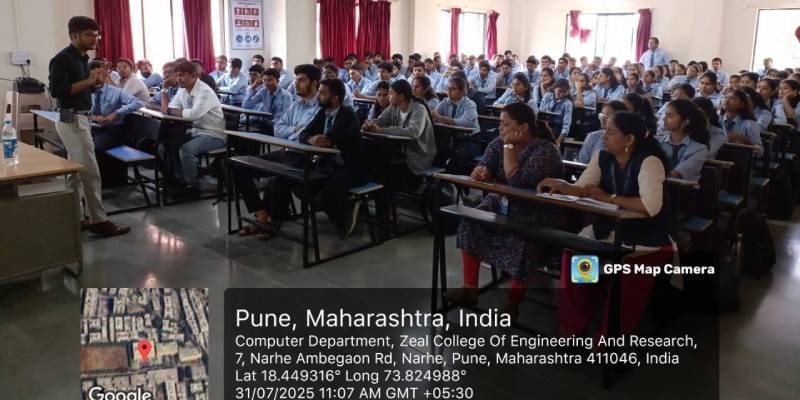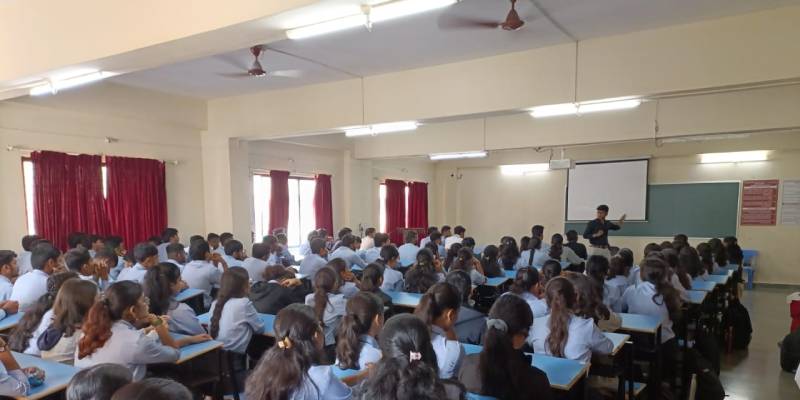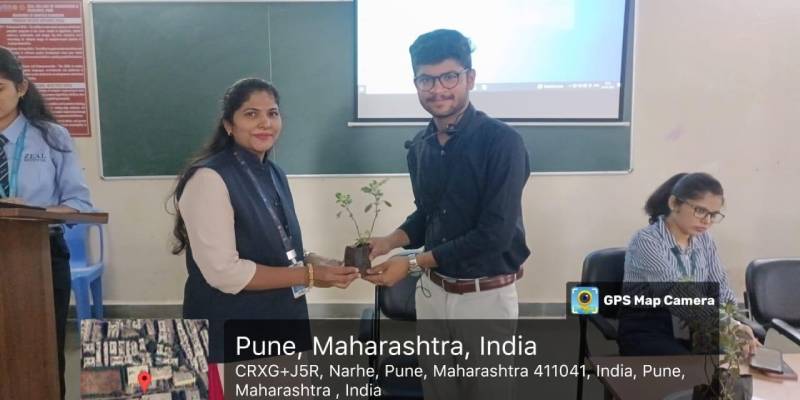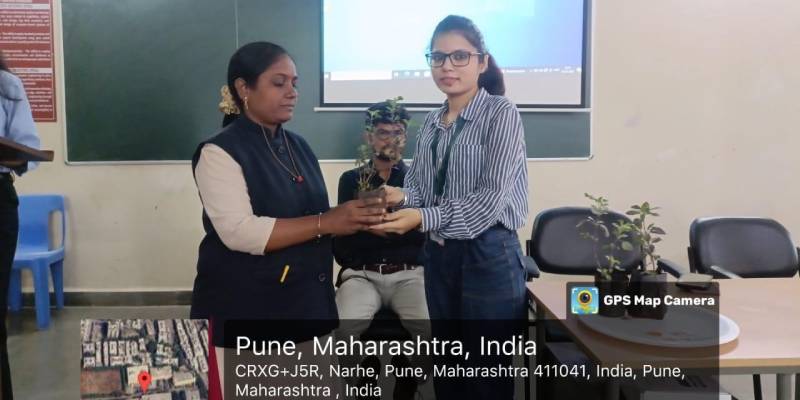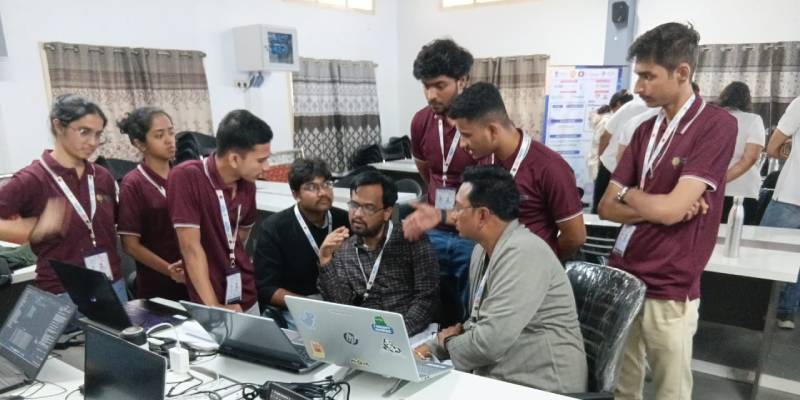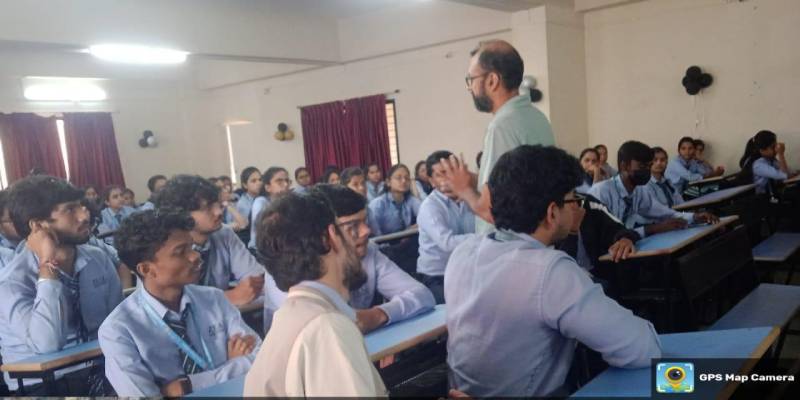
An enriching and thought-provoking session titled “Cyber Security Attacks and Career Mapping in Cyber Security” conducted Mr. Kaustubhamani Gothivarekar, Managing Head, CyberEdus, Pune for Final Year Computer Engineering Students of Zeal College of Engineering.
No. of Participants: 126
Location: Seminar Hall D3-15
Faculty Coordinator: Prof. Arunadevi S Khaple
Objective of the Session:
The Expert lecture aimed to: Educate students on modern cybersecurity attack methodologies and prevention techniques Provide career guidance for aspiring cybersecurity professionals.
Introduce hands-on experiences to develop awareness and skill sets for real-world challenges. Session Highlights the session was interactive and industry-oriented.
Key Contents Covered:
Types of Cybersecurity Attacks: AI-driven Malware, Ransomware-as-a-Service, Supply Chain Security, Social Engineering via Deep Fakes.
Career Pathways: Key Cybersecurity Roles, Career Progression Paths, Industry Certifications, Essential Skills Development
Hands-on Activities: Cyber Attack Simulation, Career Path Quiz, Live Hacking Demonstration.
Key Takeaways for Students
- Awareness: Students gained an in-depth understanding of modern cyber threats.
- Skill Development: The live demonstrations enhanced technical curiosity and problem-solving abilities.
- Career Guidance: The session clarified pathways into cybersecurity domains such as ethical hacking, network security, and data protection.
- Industry Relevance: Real-world examples linked theoretical learning to practical applications.
Outcome
Students expressed interest in pursuing advanced cybersecurity certifications such as CEH, CompTIA Security+, and CISSP.The lecture significantly contributed to the Program Outcomes (POs) and Program Specific Outcomes (PSOs), especially in developing analytical and practical problem-solving skills.
Conclusion
The expert lecture by Mr. Kaustubhamani Gothivarekar successfully bridged the gap between academic knowledge and industry practices. The Department of Computer Engineering extends sincere gratitude to the expert and acknowledges the efforts of the faculty coordinators for organizing this insightful session.