Name of Expert: Dr. Sarika Tade, Assistant Professor, COEP Technological University, Pune
Topic of the session: Faculty Development Programme on Computational Methods and Programming (S.Y. B.Tech, Sem II)
Beneficiaries: All faculty of the Electrical Engineering Department
No. of participants: 08
Venue: Conference room, Department of Electrical Engineering, ZCOER, Narhe, Pune.
A. Overview:
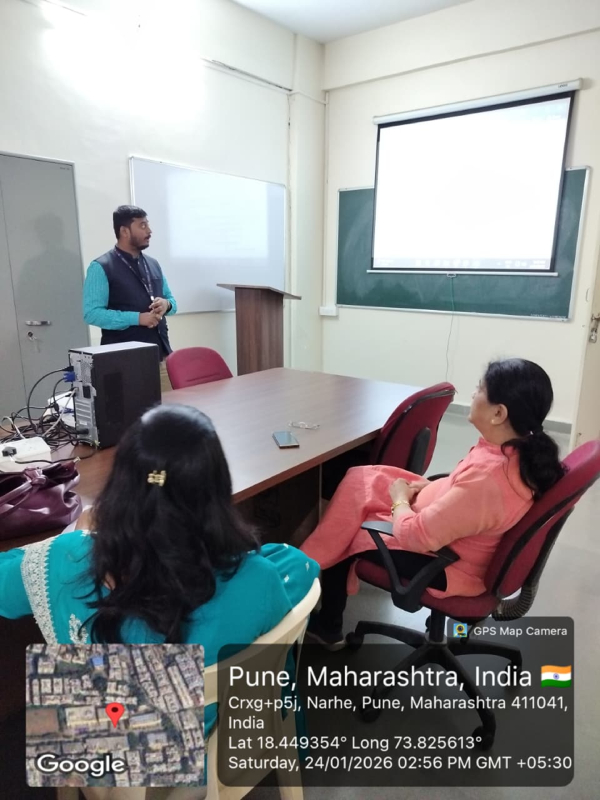
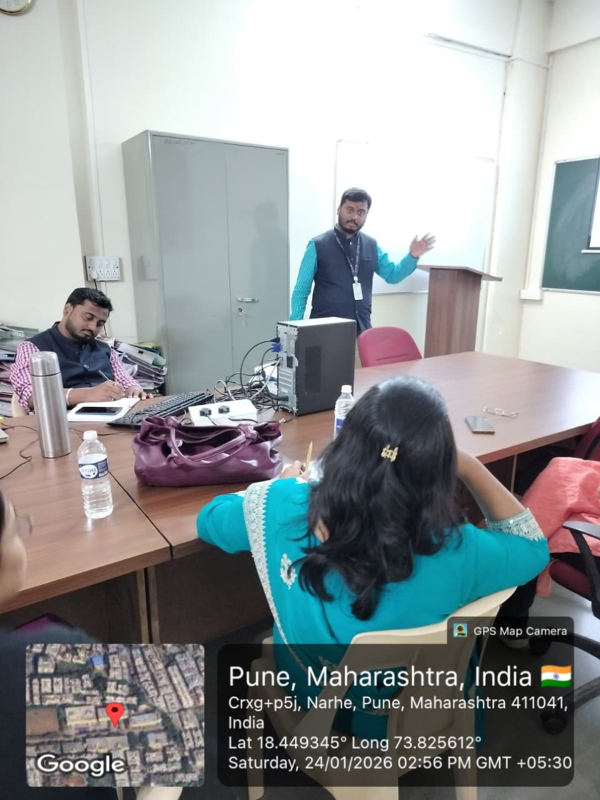
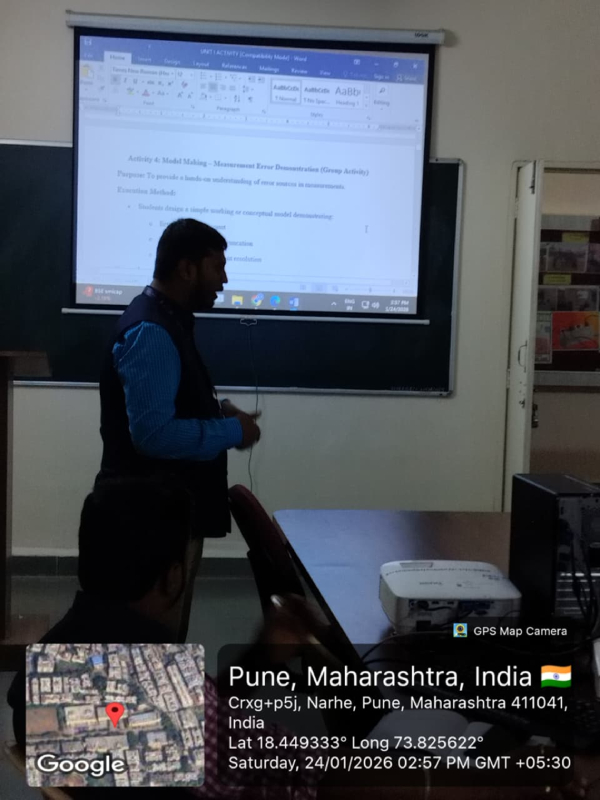
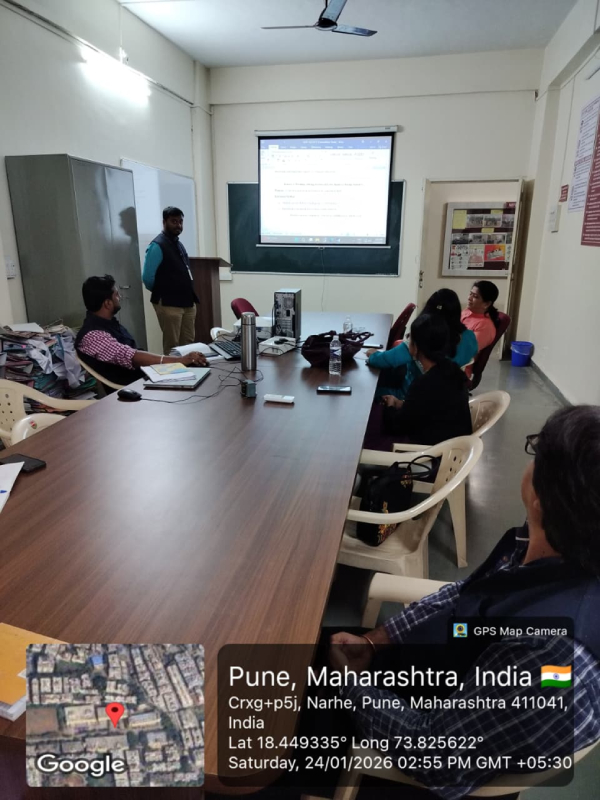
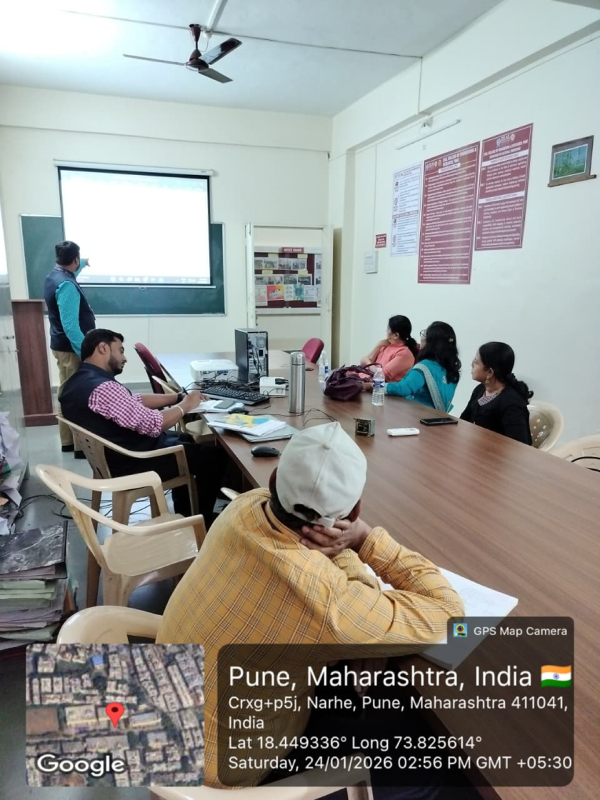
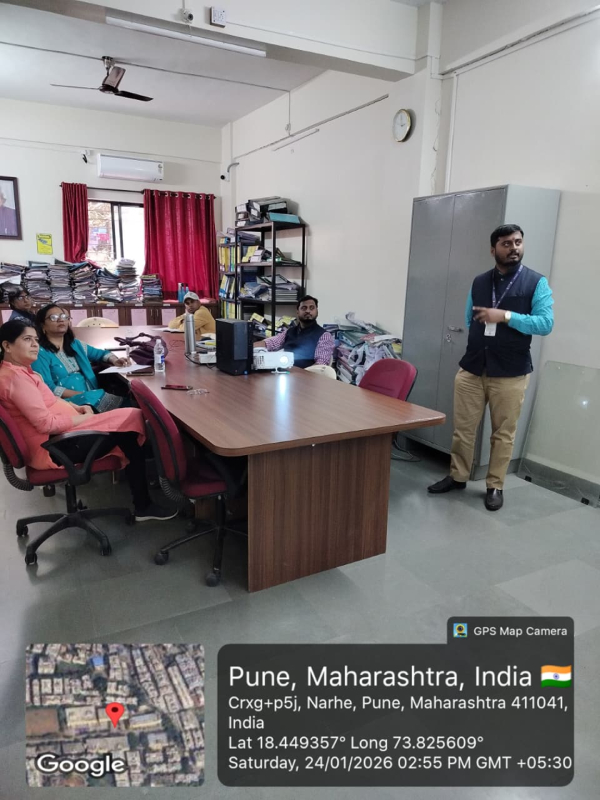
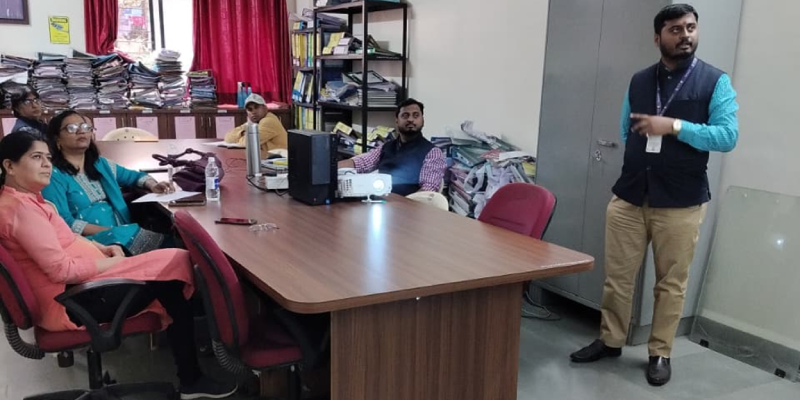
The Department of Electrical Engineering, ZES’s Zeal College of Engineering & Research (ZCOER), Pune, organized a Faculty Development Programme (FDP) on 24 January 2026 for the faculty members of the Electrical Engineering Department. The FDP was focused on effective content delivery, syllabus elaboration, and application-oriented teaching strategies for the subject Computational Methods and Programming (CMP) prescribed for Second Year B.Tech, Semester-II. The session was conducted from 02:00 p.m. to 04:00 p.m. in the Department Conference Room (C-211). The Programme aimed to enhance faculty understanding of numerical methods, strengthen pedagogical practices, and ensure effective alignment with Outcome-Based Education (OBE) principles as well as NBA and NAAC accreditation requirements.
B. Objectives of the FDP:
The key objectives of the FDP were:
- To discuss the syllabus elaboration and content delivery framework proposed by the subject teacher.
- To discuss application-based teaching approaches that enable students to understand and apply computational methods to real-world Electrical Engineering problems.
- To review and rationalize contact hours, unit sequencing, and laboratory session planning.
- To ensure effective alignment with Outcome-Based Education (OBE) principles and compliance with NBA, NAAC, and ISO quality frameworks.
- To promote activity-based, experiential, and student-centric learning approaches.
C. Resource Person and Participants:
The FDP was enriched by the presence of Dr. Sarika Tade, Assistant Professor, COEP Technological University, Pune, who provided expert academic insights and constructive recommendations. The Programme was attended by all faculty members of the Electrical Engineering Department, ensuring collective participation and uniform implementation.
D. FDP Proceedings and Key Discussions:
1. Application-oriented teaching of computational methods: A detailed discussion was conducted on integrating computational techniques with real-life Electrical Engineering applications, such as circuit analysis, power system studies, control systems, and power electronics. The subject teachers presented domain-specific examples, which were highly appreciated for improving conceptual clarity and student engagement.
2. Review of Unit-Wise Lecture Planning: The allocation of contact hours for individual units was critically reviewed. While a reduction in lectures for initial units was suggested, the necessity of strong conceptual foundations for second-year students was emphasized.
After deliberation, the existing lecture plan was retained to support gradual learning progression.
3. Case Study Integration in Curve Fitting and ODEs: It was recommended to introduce case study–based numerical problems:
- For Curve Fitting, reference to the Bureau of Energy Efficiency (BEE) – Energy Audit syllabus was suggested.
- For Ordinary Differential Equations, power system operation and transient response problems were recommended.
These suggestions were accepted to enhance analytical and problem-solving skills.
4. Topics to be included as content beyond syllabus: The importance of introducing extrapolation techniques along with interpolation was discussed. Real-time engineering applications were identified to help students understand limitations and predictive analysis in numerical methods.
5. Sequencing of Units and Laboratory Experiments: The sequence of theory units and laboratory experiments was reviewed in terms of conceptual continuity and difficulty level.
The existing structure was found pedagogically sound, with flexibility to provide prerequisite explanations wherever required.
6. Strengthening Programming Fundamentals: Although Python is not explicitly mentioned in the CMP syllabus, the FDP emphasized the importance of programming proficiency.
It was highlighted that:
- Students are mandated to complete an online certification course in C/Python/MATLAB through reputed platforms.
- A customized Python fundamentals lab manual has been developed.
- Initial laboratory sessions will focus on programming basics to ensure uniform competency.
7. CIE-2 Activity Planning and Assessment Rubrics: Unit-wise activity-based Continuous Internal Evaluation (CIE-2) plans were discussed in detail.
The importance of clearly defined rubrics was emphasized to ensure transparency, consistency, and ease of justification during NBA evaluations.
8. Bloom’s Taxonomy and Question Paper Design: Faculty members were advised to design assessments up to Bloom’s Level 5 (Evaluate) to promote higher-order thinking skills and analytical reasoning.
Mr. Chinmay Deshpande presented and elaborated on the newly structured S.Y. B.Tech syllabus for Computational methods and programming, and Mr. Chaitanya Deshpande systematically documented all suggestions and inputs received from the subject expert. The session witnessed active participation from all faculty members of the department, and the Programme was coordinated and conducted successfully.
The Faculty Development Programme successfully met its objectives by encouraging useful academic discussions, improving teaching methods, and strengthening curriculum implementation. The FDP helped enhance teaching effectiveness, academic quality, and accreditation preparedness of the CMP course. The department is committed to continuous improvement through such collaborative academic initiatives.