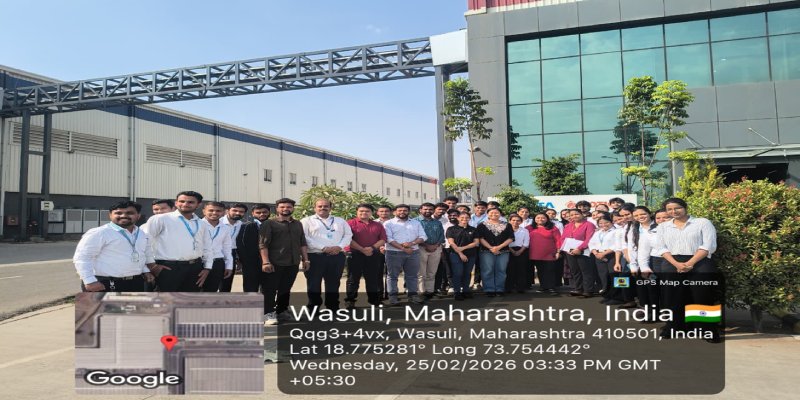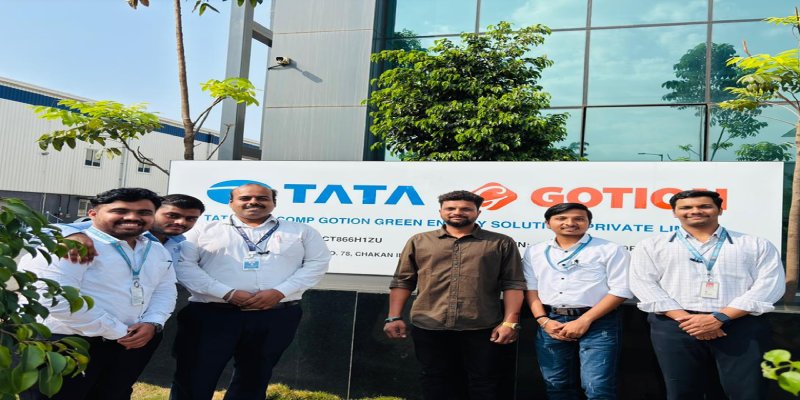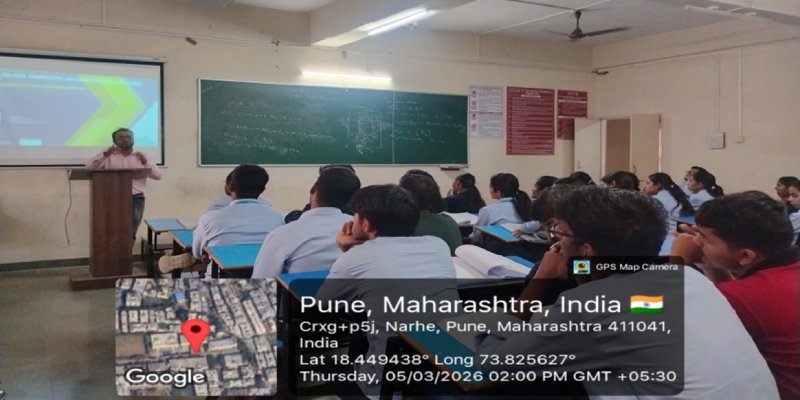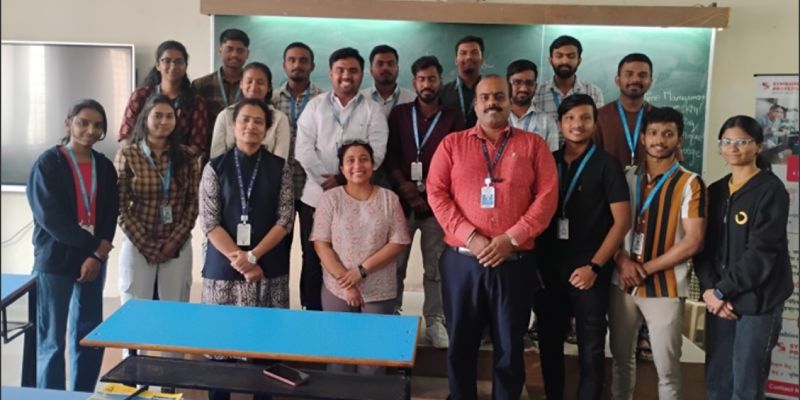

The industrial visit was organized for BE Electrical students who completed the Electric Vehicle Service Technician Training Program conducted by Symbiosis Skills and Professional University (SSPU).
The main objectives:
- To gain practical exposure to EV battery manufacturing processes
- To understand lithium-ion battery technology used in electric vehicles
- To observe industrial safety practices in battery manufacturing
- To bridge the gap between academic knowledge and industry implementation
- To explore career opportunities in the EV sector
Details of the Industry
- Tata Autocomp Gotion Green Energy Solutions Pvt. Ltd. Wasuli
Location:
- ESR Industrial Park, Plot No. 73, Chakan Industrial Area, Phase – II, Village: Wasuli, Tal: Khed, Dist: Pune – 410501, Maharashtra, India
Company Description
Tata Autocomp Gotion Green Energy Solutions Pvt. Ltd. is a joint venture between Tata AutoComp Systems Ltd. and Gotion High-Tech Co. Ltd. (China). The company specializes in the manufacturing of advanced lithium-ion battery cells, battery packs, and energy storage solutions for electric vehicles and renewable energy applications.
The company focuses on:
- EV battery pack manufacturing
- Battery Management Systems (BMS)
- Advanced energy storage technologies
- Sustainable and green energy solutions
The Chakan plant is one of the key facilities dedicated to supporting India’s rapidly growing electric mobility sector. The company plays a significant role in strengthening domestic Electrical Vehicle as well as commercial transport vehicle battery manufacturing under the Government of India’s EV and Make in India initiatives.
Schedule of the Visit
- Reporting Time at college campus: 10:00 AM
- Departure from college: 10:30 AM
- Reporting Time at company location:-01.00 PM
- Date of Visit: 24/02/2026 (Wednesday)
Students followed all safety and discipline guidelines as instructed in the official notice.
Description of the Visit
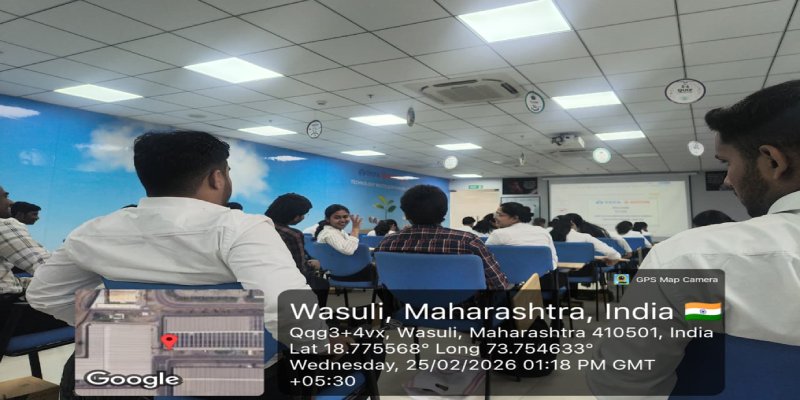
Upon arrival at the industry, students were welcomed by the company officials and provided with a safety briefing. The session covered:
Industrial safety rules
- Use of Personal Protective Equipment (PPE)
- Safety protocols in high-voltage battery environments
- Students were then guided through various sections of the plant, including:
a) Battery Cell Technology
- Explanation of lithium-ion cell structure, chemistry, and working principles.
b) Battery Pack Assembly Line
Students observed:
- Cell sorting and matching
- Module assembly
- Battery pack integration
- Cooling system integration
c) Battery Management System (BMS)
Officials explained:
- Voltage monitoring
- Temperature monitoring
- State of Charge (SOC) estimation
- Protection mechanisms
d) Testing & Quality Control
Demonstration of:
- Charge-discharge testing
- Thermal testing
- Insulation resistance testing
- Safety compliance procedures
The visit provided real-time exposure to automation systems and advanced manufacturing techniques used in EV battery production.
Safety Measures Observed
- Strict PPE compliance
- Controlled access to high-voltage areas
- Fire safety system
- Emergency shutdown systems
- Clearly marked hazard zones
- Students strictly followed all safety instructions provided by industry officials and faculty coordinators.
Learning Outcomes
After the visit, students:
- Gained practical understanding of EV battery manufacturing
- Understood industrial implementation of Battery Management Systems
- Learned about quality control in EV production
- Enhanced technical knowledge related to lithium-ion batteries
- Developed awareness of career opportunities in EV and green energy sectors
Number of Beneficiaries
BE Electrical Students (Division A & B) =33 Students
Conclusion
The industrial visit to Tata Autocomp Gotion Green Energy Solutions Pvt. Ltd., Chakan was highly informative and beneficial for the students. The purpose of this visit was to understand practical industrial applications of Electric Vehicle (EV) battery manufacturing, assembly, testing, and maintenance
The visit successfully complemented the Electric Vehicle Service Technician Training Program and helped bridge the gap between theoretical learning and industrial application. It also encouraged students to explore career opportunities in the rapidly growing EV and green energy industry.