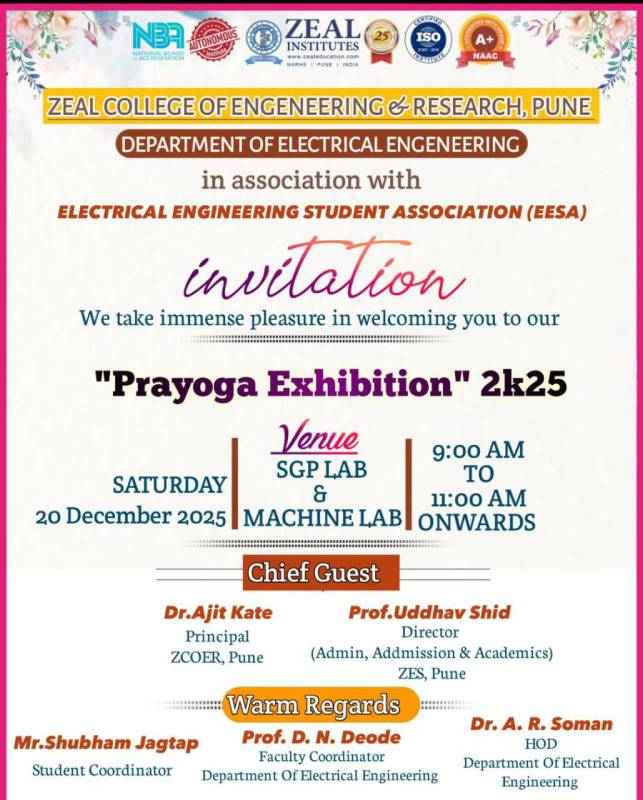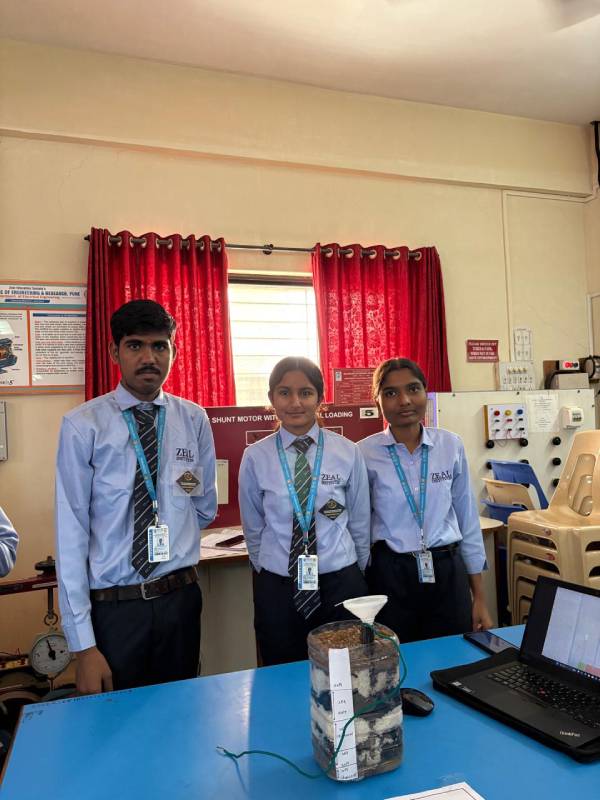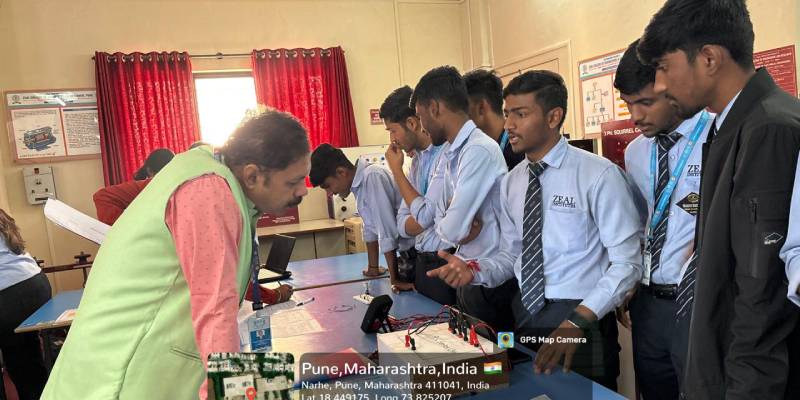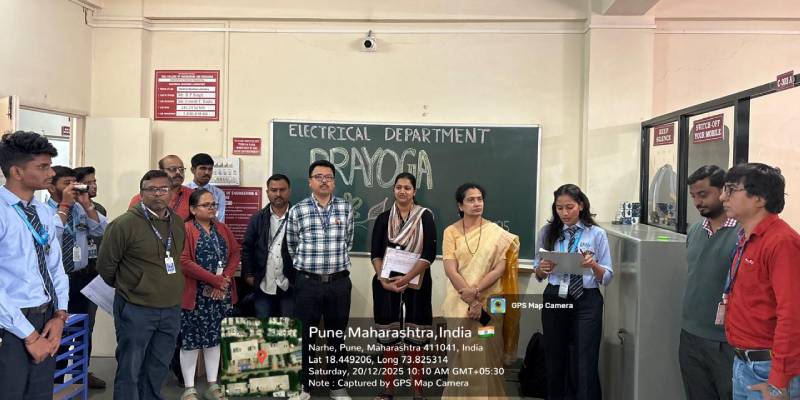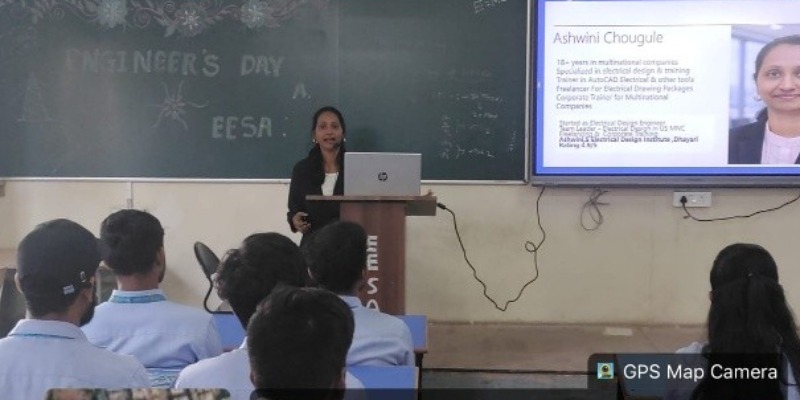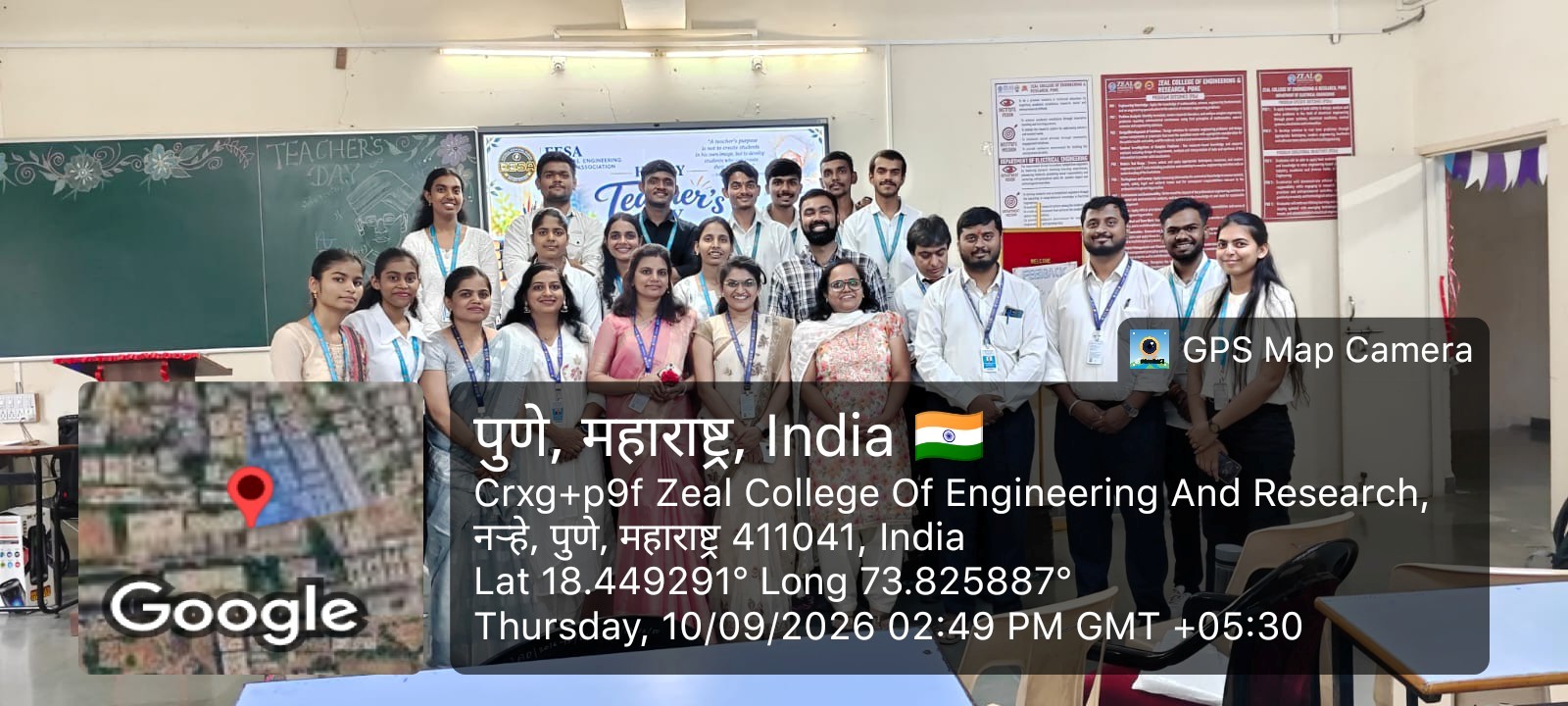

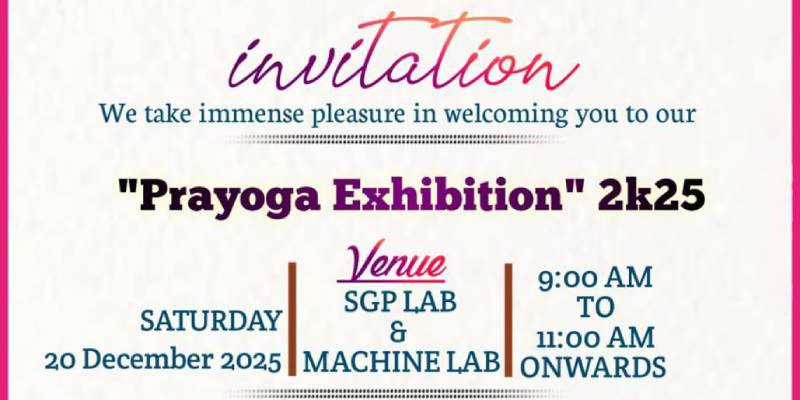
We have successfully organized “Prayoga Exhibition 2k25” on 20/12/2025 (Time 09.00am to 11.00am). The more detailed report and photographs are enclosed herewith.
Participants: FY- Students and Faculty Members.
Faculty Coordinator: Prof. Dhirendra N. Deode
Student Coordinator: Pournima Satao (FY) and all her team members
1. Introduction
Prayoga Exhibition was conducted by the Electrical Engineering Students’ Association (EESA) under the Electrical Engineering Department with the aim of encouraging practical learning and innovative thinking among students. This exhibition served as a common platform for students to present working models and projects based on electrical engineering concepts. The event focused on strengthening technical understanding, improving hands-on skills, and motivating students to apply theoretical knowledge to real-life engineering problems through teamwork and creativity.
2. Objectives
The major objectives of Prayoga Exhibition were:
- To strengthen students’ understanding of electrical engineering fundamentals through practical, project-based activities.
- To encourage analytical thinking, problem-solving abilities, and effective teamwork among students.
- To offer a platform for students to demonstrate innovative ideas and engineering solutions with real-world and social relevance.
- To evaluate students’ creativity, technical competence, and communication skills during project presentations.
3. Event Details
- Event Name: Prayoga – Project Exhibition
- Organized By : EESA Committee, Electrical Engineering Department
- Date of Event: 20/12/2025
- Venue: Power Electronics lab C-202-B, Electrical Measurement lab C-206 & Electrical Machines lab C204
The exhibition included project demonstrations by students from first year, covering a wide range of core electrical engineering topics such as circuit analysis methods, AC and DC circuits, electrical machines, protection devices, and earthing systems. The projects emphasized practical implementation, experimental verification, and comparison of theoretical calculations with actual hardware results.
4. Project Domains
Students presented projects across various electrical engineering domains, including:
4.1 Electrical Circuit Analysis
- Mesh analysis
- Nodal analysis
- Superposition theorem
- Thevenin’s theorem
4.2 AC and DC Circuit Systems
- RL series circuit
- RC series circuit
- RLC series circuit
- Series and parallel combinations of resistance, inductance, and capacitance
4.3 Electromagnetic Principles
- Faraday’s Law of electromagnetic induction
- Lenz’s Law and its practical demonstration
4.4 Electrical Machines
- DC motor Operating principle
- Transformer operating principles
4.5 Electrical Protection Devices
- Miniature Circuit Breaker (MCB)
- Importance of protection in electrical systems
4.6 Earthing and Safety Systems
- Pipe earthing method
- Plate earthing method
- Role of earthing in electrical safety
4.7 Hardware Testing and Result Analysis
- Experimental setup and testing of circuits
- Comparison of theoretical calculations with practical results
5. Judging Criteria
The projects were evaluated based on:
- Problem Identification & Relevance
- Innovation & Creativity
- Technical Design & Methodology
- Practical Implementation & Functionality
- Feasibility, Scalability & Real-world Application
- Presentation, Clarity & Documentation
6. Event Highlights
- Active participation from all the students of first year.
- Display of high-quality electrical engineering prototypes and models.
- Judges appreciated the creativity and practical relevance of the projects.
- Students successfully applied theoretical knowledge to practical, real-life situations.
- Several projects focused on sustainability, smart energy, and industrial automation.
7. Outcomes of the Competition
The successfully achieved its goals:
- Strengthened students’ practical understanding of core electrical engineering concepts.
- Improved communication, leadership, and teamwork skills.
- Encouraged research orientation and innovative thinking.
- Promoted industry-relevant project development and problem-solving.
9. Conclusion
The Prayoga Exhibition 2k25, conducted by the EESA Committee of the Electrical Engineering Department, successfully provided students with a valuable opportunity to demonstrate their technical skills, creativity, and innovative thinking. The exhibition encouraged practical learning and strengthened students’ understanding of real-world engineering applications. The event concluded on a positive note with sincere appreciation extended to all participating students, faculty members, judges, and organizers for their support and contributions in making the exhibition a meaningful and successful academic experience.